


On Tuesday, May 19, the Rollins Museum of Art will open Being Outdoors: Recreation in the American Imagination. This exhibit will allow guests to examine the connection between nature, recreation, and national identity.
Presented in celebration of the United States’ Semiquincentennial, the exhibition commemorates America’s 250th anniversary by exploring how outdoor activities have shaped American culture and history. Spanning works from the 19th through the 21st centuries, the exhibition will feature paintings and prints that capture moments of leisure, exploration, and interaction with the natural world.
Through scenes of fishing, picnicking, swimming, tourism, and ice skating, Being Outdoors examines how artists have interpreted the American landscapes and the role recreation has played in defining the nation’s identity over time.
The exhibition includes works from the museum’s permanent collection by notable artists such as Thomas Cole, Winslow Homer, Robert Freeman, and Jaune Quick-To-See Smith, alongside selected loaned works that further expand the exhibition.
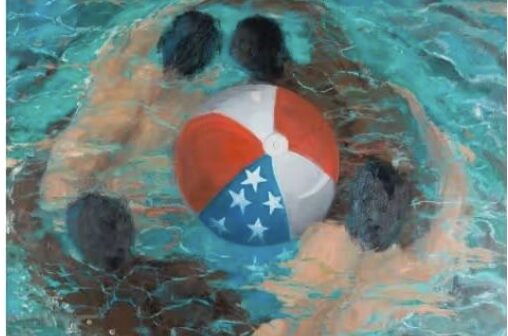
Among the featured works is Freeman’s Marco Polo, a vibrant painting depicting figures joyfully gathered in a swimming pool around a beach ball adorned with the American flag. The work reflects on both recreation and racial history, referencing the segregation-era restrictions that once prevented Black Americans from accessing public pools made for white communities.
Expressive and colorful, the painting transforms the outdoor setting into a symbol of unity and belonging. Freeman, who grew up in Washington, D.C., and Ghana, often explores experiences like these and histories of Black Americans.
Come From Image courtesy of Rollins Museum of Art
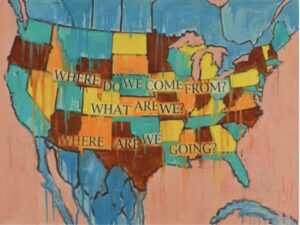
The exhibition also highlights the work of Jaune Quick-To-See Smith, a member of the Confederated Salish and Kootenai Nation whose art frequently addresses Native identity, geography, and cultural displacement. Her mixed-media piece Where Do We Come From? features a colorful, dripping map of the United States layered with questioning text. The work references French artist Paul Gauguin’s famous 1897 painting, Where Do We Come From? What Are We? Where Are We Going?, reframing those questions through an Indigenous perspective.
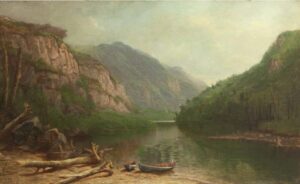
Another feature artist, Mary Josephine Walters, presents romanticized landscapes inspired by her plein-air painting excursions to New York’s Catskill Mountains. Her work captures the grandeur of nature while emphasizing the spirit of outdoor exploration that characterized much of 19th-century American art.
Being Outdoors: Recreation in the American Imagination can be seen through Jan. 3, 2027, and will evolve over the course of its run. With two editions, the summer edition will feature an interactive component allowing visitors to share their own relationships with the outdoors, while the fall edition will introduce a new rotation of works.





Comments