


Fifteen years ago, NASA ended an era in human space flight.
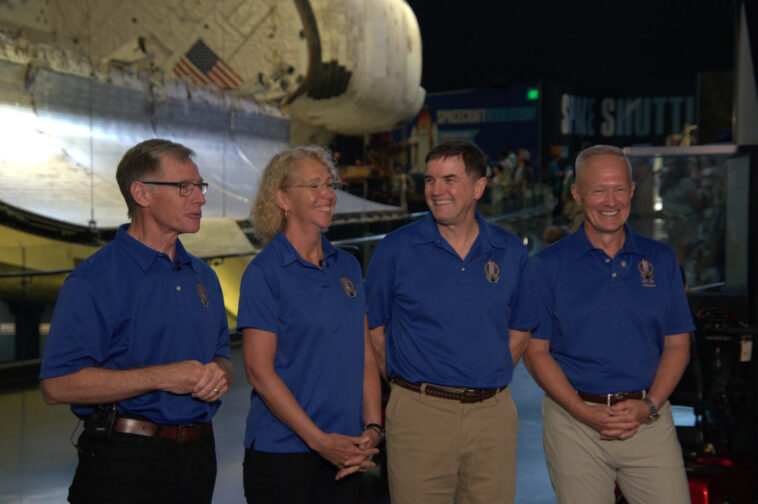
Space Shuttle Atlantis touched down in July 2011 after completing STS-135, the final mission of the orbiter, and marked the conclusion of the Space Shuttle Program with commander Christopher Ferguson, pilot Douglas Hurley, mission specialist Sandra Magnus, and mission specialist Rex Walheim aboard.
The crew reunited since launch to commemorate the mission’s 15th anniversary underneath the orbiter at the Kennedy Space Center (KSC) Visitor Complex on Saturday afternoon. When it came to the historic ending of the nearly 13-day voyage, Hurley described the emotion in a few words.
“It was an incredible honor,” Hurley said. “We were smaller than a traditional crew had flown before, which I think helped because our training flow was really short. But we just felt this immense sense of honor, and we wanted to represent.”
Although the quartet knew it was going to be the last mission, there was no guarantee. According to Ferguson, their mission did not receive funding until the training, about six months before launch.
As STS-135 was set to blast off, the crew recalled their first encounter with Atlantis. While Ferguson said he was entranced walking into one of the orbiter processing buildings, enveloped in scaffolding, Walheim described the emotion of taking on the final task.
“I think what comes to mind is gratitude,” Walheim said. “Gratitude for this vehicle took us to space and back, for the people who worked on it and made it possible and safe to do, and gratitude for having the chance to be part of this incredible program.”
STS-135 was tasked with carrying the Raffaello multipurpose logistics module to deliver supplies, logistics, and spare parts to the International Space Station (ISS).
Transferring about 6,000 to 8,000 pounds of cargo across the hatch surprised Magnus the most, she said. The mission specialist called, trying to understand how to remove cargo efficiently with minimal effort, which was like a “big three-dimensional jigsaw puzzle.”
Aside from the workload, the quartet recognized the sights to behold from above. Hurley remembered his amazement upon seeing the auroras, colorful displays of light between the Sun and Earth, a luxury he had not had before. On his previous flights, the Cupola, a small module designed for observing operations outside the station, was not on the ISS.
“The Aurora that summer in 2011 was spectacular,” Hurley said. “You could just see the ribbons of the Aurora coming up almost as high as we were, and flying through this field of breeze and purples. I didn’t even want to pick up a camera because I didn’t want to stop the moment.”
Ferguson cherished the time he had to look out from the Cupola at the Earth, adding a moment when the crew commemorated those involved in the mission’s preparation.
“It wasn’t until the night before we landed that we actually had a little bit of time to exhale and look out the window to appreciate the Earth a little bit,” Ferguson said. “Along the way, we tried to thank the various flight control teams that had worked with us throughout our one-year training course. It was their last mission too, so we tried to sort of call them out by name a little bit, and it was fun going through that.”
Magnus chimed in about how she stood in the Cupola for a couple of hours to sneak views of the Earth and enjoy the peaceful quiet of the ISS.
Ferguson commented on how, although the ISS carries the history of those who inhabited it for over 25 years, it also maintains its odor. He said he contacted the station manager, Michael Fossum, about discovering that a foul smell was caused by the toilet halfway through their dock mission.
“Space is amazing,” Ferguson said. “One day you’re out walking in space and fixing things, and the next day you’re inside trying to plunge your toilet.”
Even though the crew’s primary task was to make a supply drop, there were lessons to be learned from the mission. Magnus said one of the things we must consider as we prepare to inhabit the moon is the relationship between the shuttle and ground crews, and vehicles to be more autonomous.
“As we get further away, we need vehicles that are able to maintain themselves, or ground’s going to have to take a little bit more of a strategic, tactical, everyday role,” Magnus said. “And these are not necessarily technical issues, but operational issues that we have to address as we give people more and more remote from the planet and how you define those different roles of responsibilities and operational paradox.”
Once the crew touched down on Runway 15 at KSC’s Shuttle Landing Facility for the final time, Ferguson said he was satisfied with a reasonable landing and an accomplished mission.
“One thing that we wanted to make sure we did was end the space shuttle program without a lot of drama, and it’s not over until your wheels are on the ground,” Ferguson said. “When we had a little time alone at the end of the day, you’re like, ‘Wow, man. I’m really glad we had the chance to do that.’ And I’m really glad that everything turned out okay, because we wanted the nation to remember the shuttle program on the highest note possible.”
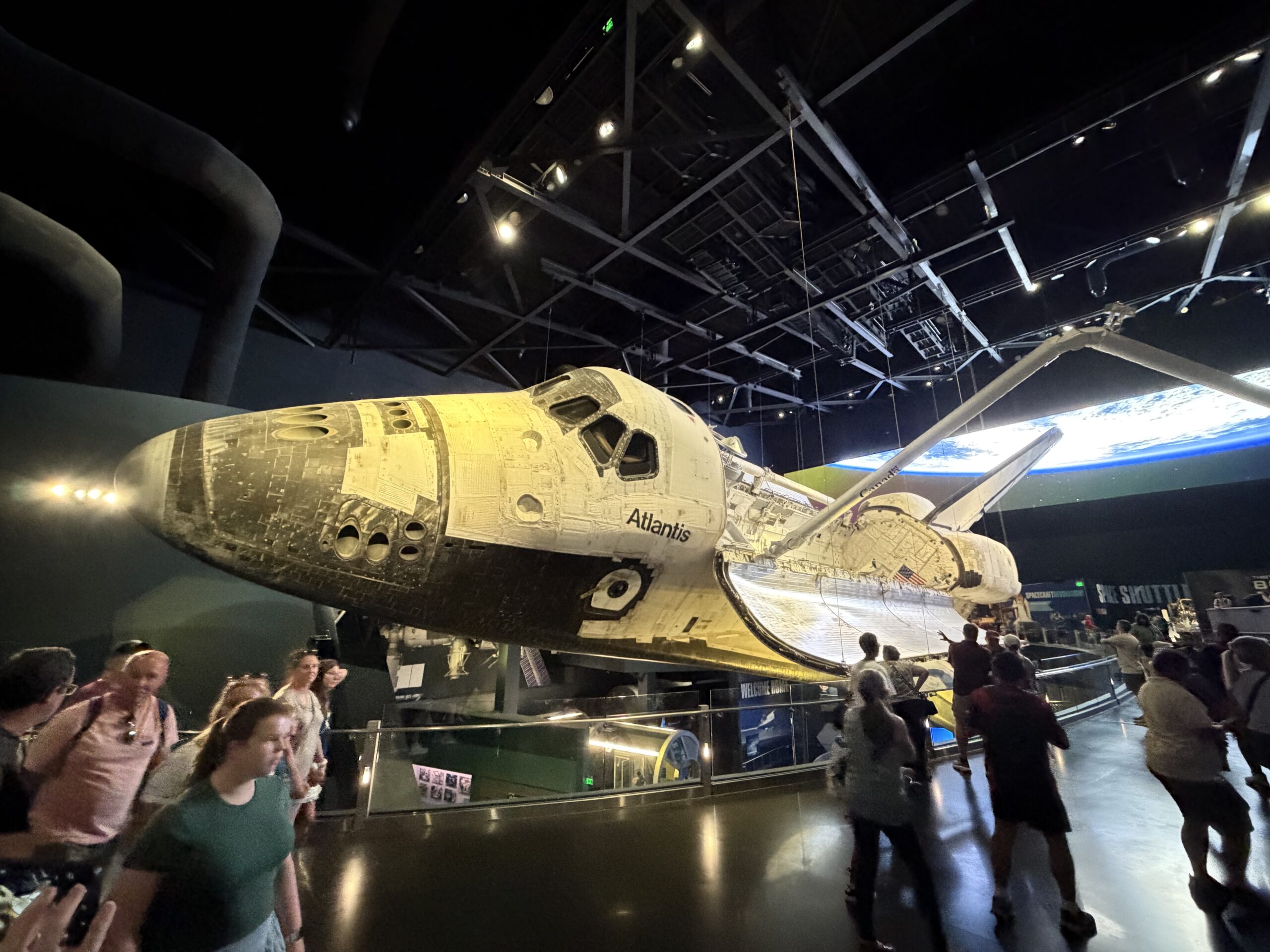
Today, the Atlantis sits at the KSC Visitor Complex, alongside the legacy of NASA’s Space Shuttle Program.


Comments