


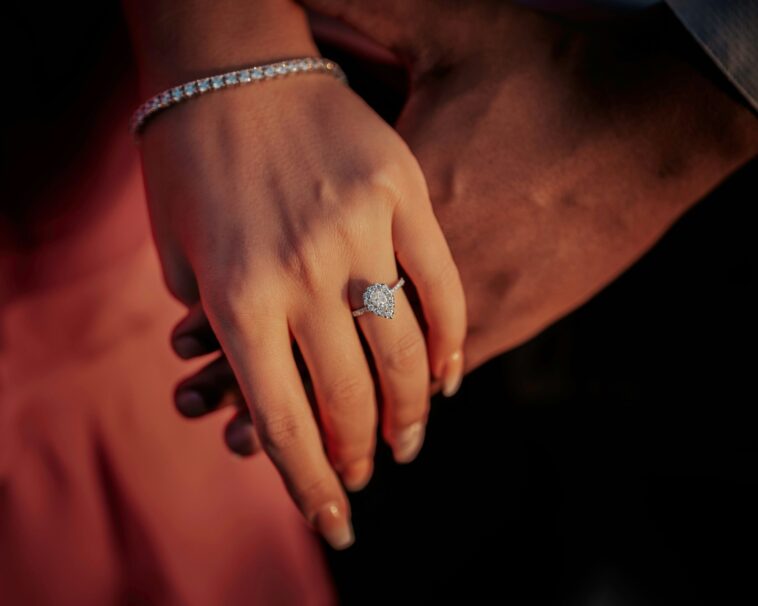
Pear shaped diamonds are odd in a good way. One end comes to a point, the other rounds off into a dome, and getting that balance right is the difference between a stone that looks stunning and one that just looks a little off. A lot of buyers fall for the romantic shape and skip right past the details that actually matter.
So here’s what to check before you buy. Length to width ratio, symmetry, shoulder shape, point alignment, sparkle, and that bow tie effect every pear diamond has, at least to some degree. We’ll also get into how the 4Cs work a bit differently here compared to round or princess cuts.
Length to Width Ratio
Shopping for a pear shaped diamond? Check the length to width ratio first. This one number tells you whether the stone reads as slender and elegant, or short and a bit stubby. Most jewelers point buyers toward 1.50 to 1.75 for that classic, balanced pear look. Go lower, and the stone starts looking more rounded than pear-shaped. Go higher, and it can look too narrow, almost stretched.
Best Brilliance lists this ratio right on the product page for every pear diamond, so you’re not stuck estimating from a photo.
Symmetry and Rounded Shoulders
Symmetry is where things fall apart on a lot of pear diamonds. Both sides of the stone need to mirror each other. Draw an imaginary line from the tip straight down through the dome, and each half should match in curve and angle. Even a small mismatch throws the whole thing off.
Then there are the shoulders, that curved bit near the point. They should be rounded, not straight or angular. Straight shoulders can leave a pear diamond looking unfinished, almost like the cutter stopped halfway. Rounded shoulders give it a softer, more polished profile instead.
Point Alignment and Why It’s Easy to Miss
The point needs to line up exactly with the center of the rounded end. Off even slightly, and the stone can look lopsided once it’s set in a ring. This is one of those things that’s genuinely hard to catch in a small product photo. Ask for extra images. Or ask for a certificate that spells out the symmetry grade directly, so you’re not just guessing.
A misaligned point doesn’t always jump out right away, either. It becomes obvious once the ring catches light from a few different angles, which is exactly the moment you don’t want to be second-guessing a purchase you already made.
Sparkle and the Bow Tie Effect
Every pear diamond has some version of a bow tie. It’s that darker area running across the center of the stone, shaped roughly like, well, a bow tie, caused by how light bounces through the diamond’s facets. It’s not a flaw exactly, just part of how the cut works. But a bow tie that’s too dark, or too wide, can pull focus away from the sparkle you actually paid for.
A well-cut pear diamond keeps that bow tie subtle. It blends into the stone’s overall brilliance instead of sitting there as an obvious dark patch.
How the 4Cs Apply to Pear Diamonds
Here’s how the four Cs apply to pear diamonds:
| C | What to Look For in a Pear Diamond |
| Cut | The one that matters most here. A poor cut leads to visible bow ties and sparkle that looks uneven across the stone. |
| Color | Slightly lower grades, like G or H, can still look great since the point of the shape hides a tint better than a round cut would. |
| Clarity | VS2 or SI1 usually reads clean to the naked eye, especially since small inclusions can hide near the point or shoulders. |
| Carat | Pear diamonds tend to look bigger than round diamonds at the same carat weight, thanks to that elongated shape. |
Setting Choices That Complement the Shape
A V-prong, or double-prong, at the point is one of the smarter choices for a pear diamond. It protects the most fragile part of the stone from chipping down the road. Halo settings work well too, adding extra sparkle around the edges while making the center stone look a little bigger than it is. Best Brilliance carries a handful of setting styles built specifically for pear shaped stones, which makes it easier to see how each one changes the overall look before you commit to anything.
Final Thoughts
Choosing a pear shaped diamond really comes down to noticing details that don’t always show up in a photo, such as ratio, symmetry, point alignment, and how that bow tie plays out under different lighting. Best Brilliance makes this a bit easier since they list detailed specs and symmetry grades on every stone, so you actually know what you’re getting before it arrives. If you’re ready to start comparing, their pear diamond collection is a good place to begin browsing.
FAQ
What’s the ideal length to width ratio for a pear diamond?
Most buyers land somewhere between 1.50 and 1.75 for that balanced, classic pear look, though it does come down to personal taste too.
Can you avoid the bow tie effect entirely?
Not really. Every pear diamond has some version of it. A well-cut stone just keeps it subtle instead of distracting.
Is a pear diamond a good choice for an engagement ring?
Yes, definitely. It’s a popular pick thanks to the elongated shape, which can make a stone look bigger and the finger look longer too.
Does Best Brilliance offer certified pear shaped diamonds?
Yes. Best Brilliance includes full certification, cut and symmetry grades included, on every pear diamond in the collection.


Comments