
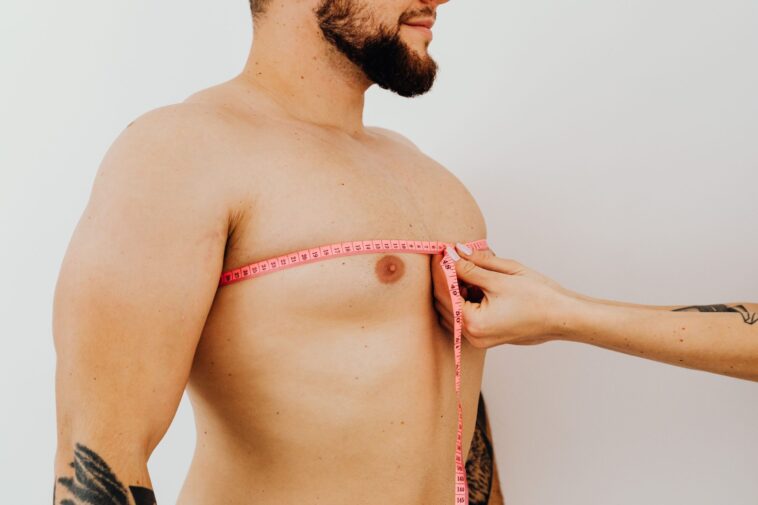
A guy notices it in a photograph first, usually one he did not pose for. A flat shirt in the mirror reads differently from the candid shot taken at a barbecue, and something about the chest looks softer than he expected. He says nothing to anyone.
That silence is the part worth fixing. Changes in male chest appearance are extremely common, well described in medical literature, and frequently traceable to something specific, yet they get treated as a private failure of discipline rather than a question with an answer.
So here is the plainer version. Some of it is tissue, some of it is hormones, some of it is a prescription you started last spring, and almost none of it is a character flaw. Knowing which one you are dealing with changes what you should do next.
Chest Changes Are Common, and Mostly Unspoken
Estimates vary by study and method, but a large share of adult men experience some degree of breast tissue enlargement at some point, with the numbers rising in adolescence and again later in life. It is not rare. It is simply not discussed, which makes every individual case feel like an anomaly.
The social cost shows up in small avoidances. Shirts kept on, posture adjusted, certain angles managed. Men tend to reframe the whole thing as laziness and respond with more bench press, because that is the script available to them. The script is wrong, and the reason is anatomical.
Glandular Tissue and Fat Behave Differently
True gynecomastia is a proliferation of glandular breast tissue, and it typically presents as a firm, rubbery, disc-shaped mass sitting directly under the nipple, often tender, often on both sides. Pseudogynecomastia is the fatty version, diffuse and soft, tied to overall body weight. The distinction matters because the two respond to completely different things.
Fat responds to a sustained calorie deficit, broadly and unevenly, on its own schedule. Glandular tissue does not. You can get genuinely lean and still have a firm nodule under the areola, which is why the gym-only approach leaves some men confused and discouraged after a year of real effort.
Hormones Shift at Predictable Moments
Breast tissue grows in men when the balance between estrogen and testosterone tips, and that balance shifts at several predictable life stages. Newborns, adolescents in the middle of puberty, and older men all see physiologic changes that usually resolve or stabilize without intervention.
Outside those windows, a shift usually has a driver. Low testosterone is one of the most common, and the Endocrine Society lists breast enlargement or tenderness directly among the symptoms of male hypogonadism, alongside reduced energy, lower libido and loss of muscle mass. Liver disease, kidney disease, thyroid overactivity and obesity can all push the same lever, since body fat converts androgens into estrogen.
A chest change rarely arrives alone. Look at what else changed.
Medications and Supplements Deserve a Second Look
After persistent pubertal cases, medication is the leading cause, and the list is longer than most people expect. The American Academy of Family Physicians catalogs the usual suspects: spironolactone, cimetidine and ranitidine, ketoconazole, certain antipsychotics and antiretrovirals, prostate cancer therapies, and more. Spironolactone in particular has a strong association, and stopping it often brings regression within about three months.
Anabolic steroids belong in the same conversation, since supraphysiologic testosterone gets aromatized into estrogen and the chest is where that shows. The anti-doping literature on performance-enhancing drugs puts breast tissue development on the short list of visible early effects in men, next to acne and testicular shrinkage. Over-the-counter test boosters and unlabeled supplements carry the same risk with none of the oversight.
Bring your full medication list to the appointment. All of it.
Evaluation Is Reasonable, and Not an Overreaction
The threshold for getting looked at is lower than men assume. Rapid growth, a hard or fixed lump, one-sided change, skin dimpling, nipple discharge or weight loss all warrant prompt assessment, because male breast cancer is uncommon but real and presents differently from gynecomastia. A standard workup is unglamorous: history, exam, a review of your medications, and targeted bloodwork.
Where the tissue is persistent, has been there for years, and is clearly glandular, treatment options narrow toward surgery, and men researching male breast reduction Toronto generally find that the procedure targets exactly the tissue training cannot touch. Timing is flexible, and results are similar whenever it happens.
There is also the emotional side, which deserves more than a shrug. If the preoccupation is eating into your social life, local mental health resources are worth using in parallel with any medical evaluation, not after it.
Final Thoughts
Chest appearance is one of those topics where the available advice is mostly noise: harder workouts, a stricter diet, a compression shirt, silence. The useful move is less dramatic. Find out what the tissue actually is, and what in your life might be driving it.
Sometimes the answer is a medication swap and a follow-up in three months. Sometimes it is a hormone panel that explains several symptoms at once. Sometimes it is a surgical consult after years of assuming effort was the missing ingredient. All three are better than guessing.
Confidence tends to follow information, not the other way around.

