


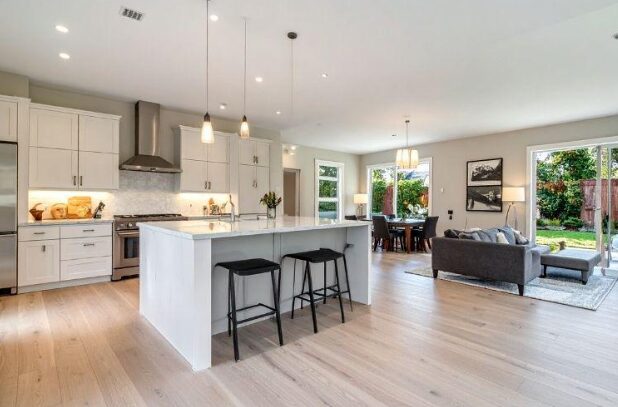
Alt text: Modern Open Concept Kitchen
Image link: https://www.canva.com/photos/MAG87rz-RXk/
Open-concept kitchens have become a defining feature of modern homes, especially in regions like Central Florida where indoor–outdoor living is part of everyday life. But with that openness comes a practical challenge: keeping the kitchen air clean, fresh, and comfortable without disrupting the space’s visual flow.
That’s where ductless range hoods step in. Once considered a secondary option, they are now earning serious attention from designers and homeowners who want flexibility, style, and performance, especially in humid climates where traditional ventilation can be complicated or restrictive.
In today’s kitchen design landscape, function and aesthetics are no longer separate conversations. They’re intertwined. And ductless range hoods sit right at that intersection.
Why Ductless Range Hoods Are Gaining Traction
At their core, ductless range hoods work by filtering air through internal systems, typically charcoal or similar filtration, before recirculating it back into the kitchen. Instead of venting air outside, they clean and reuse it within the space.
This approach has become increasingly appealing for remodels, condos, and open-plan homes where installing ductwork isn’t always feasible.
As one design authority explains: “Ductless range hoods offer unparalleled flexibility in kitchen design. Whether you have a compact kitchen or an open-concept layout, these hoods can be installed virtually anywhere. This adaptability allows homeowners to design their kitchens without being constrained by the need for duct placement, making it easier to achieve the desired aesthetic and functionality.” — Design Experts at Arnold’s Appliance
That flexibility is especially relevant in Central Florida homes, where architectural layouts often prioritize open flow, natural light, and seamless transitions between cooking, dining, and living areas.
A Practical Solution for Humid, Design-Forward Homes
Humidity is a constant design factor in Florida living. It influences materials, airflow, and even how spaces feel at different times of day. While ducted systems remain the most powerful ventilation option, they aren’t always the most practical in every home.
Ductless systems provide an alternative that supports both function and form. They help reduce cooking odors and airborne particles while allowing designers to maintain clean ceiling lines, uninterrupted cabinetry, and more freedom in layout planning.
As noted by design professionals, “Ductless range hoods are increasingly popular. They eliminate the need for an exhaust duct, offering greater flexibility in hood positioning. They’re ideal if you want to maintain a clean and uniform appearance in your kitchen without compromising the hood’s extraction performance.” — Tendances Concept Montreal
This balance between visual simplicity and functional air management is what makes ductless systems particularly relevant for contemporary Florida homes that lean into minimalist, airy design.
Where Design Meets Craftsmanship
In modern interiors, range hoods are no longer purely utilitarian. They’ve become focal points, sculptural elements that anchor kitchen design.
This is where craftsmanship plays a defining role. CopperSmith approaches kitchen ventilation with a design-first philosophy. Their range hoods are not treated as afterthoughts, but as architectural statements, crafted in metal, shaped with intention, and designed to complement a wide range of interior styles.
With more than 80 finishes and textures and over 65 models, homeowners and designers can tailor a hood to match nearly any aesthetic direction, from warm industrial copper tones to sleek contemporary stainless steel surfaces.
That level of customization matters in open-concept homes, where the kitchen is always in view. The hood becomes part of the visual language of the entire living space. You can check them out at worldcoppersmith.com.
Customization That Supports Real Design Freedom
One of the most compelling advantages of modern ductless range hoods is adaptability. They don’t force homeowners into rigid layouts or design compromises. Instead, they open possibilities.
CopperSmith’s approach centers on this idea of “endless customization,” where size, finish, and form are tailored to the needs of the project, not the other way around. This flexibility is especially valuable in renovation work, where existing architecture often limits duct installation.
Beyond aesthetics, customization supports various residential and commercial applications. From compact urban kitchens to expansive open-plan homes, ductless systems can be integrated into a wide range of environments without sacrificing design cohesion.
The Role of Sustainability in Modern Kitchen Design
Sustainability is no longer a niche consideration in interior design; it’s a baseline expectation. Homeowners are increasingly looking for products that balance durability, responsible material use, and long-term value.
CopperSmith’s products are designed with this mind shift. Their handcrafted metalwork is built for longevity, supporting the idea of a “forever home” rather than short-term renovation cycles. Instead of disposable design trends, the focus is on enduring materials and timeless form.
This approach extends beyond range hoods into their broader architectural offerings, including sinks, bathtubs, furniture, fire pits, and outdoor pieces. Each category reflects a consistent design philosophy: functional objects that elevate the living experience in a space.
Why Ductless Doesn’t Mean Compromise
A common misconception is that ductless systems are inherently weaker than ducted alternatives. While they do operate differently, their effectiveness depends heavily on design quality, filtration systems, and proper use.
In well-designed kitchens, ductless range hoods play a meaningful role in maintaining day-to-day comfort, especially when paired with good airflow habits and regular filter maintenance. More importantly, they allow designers to prioritize spatial harmony. No bulky duct runs. No structural limitations. Just clean integration.
As one industry perspective puts it: “Ductless ventilation is best thought of as filtration + circulation, not full exhaust.” — Interior design ventilation commentary
That distinction is important. Ductless systems aren’t trying to replicate industrial exhaust solutions; they’re designed to support modern living environments where aesthetics and flexibility matter just as much as raw extraction power.
A Kitchen Designed for Living, Not Just Cooking
In Central Florida homes, the kitchen is rarely just a cooking space. It’s a social hub, a design statement, and often the most lived-in area of the home. That means every design decision carries weight.
Range hoods, once purely functional, now contribute to atmosphere, style, and comfort. A well-designed ductless hood doesn’t disappear; it integrates. It becomes part of the architecture.
CopperSmith emphasizes this philosophy through what they describe as concierge-level service, working closely with designers, architects, and builders to bring highly customized visions to life. Their role is not just manufacturing but collaboration, helping translate ideas into handcrafted metal forms.
Final Thoughts
Ductless range hoods have moved far beyond their “alternative option” status. In today’s open-concept, design-driven homes, especially in humid climates like Central Florida, they offer a compelling balance of flexibility, style, and practical ventilation.
They support cleaner layouts, greater design freedom, and a more cohesive visual experience in kitchens that are meant to be seen and lived in. And when paired with artisan craftsmanship and extensive customization options, they become more than appliances. They become part of the home’s architectural identity.


Comments