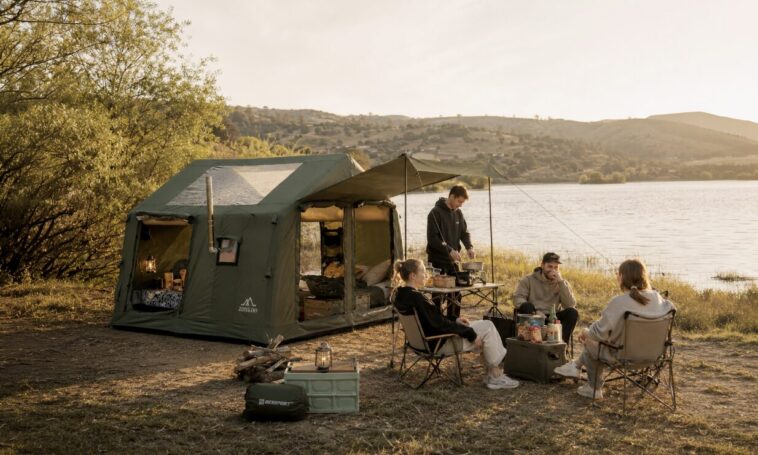
For many Central Florida families, camping does not have to begin with a remote forest or a long road trip. A backyard trial run, followed by a weekend campsite not too far from Orlando, is often a more realistic place to start. Kids may be excited to sleep outdoors, and parents may welcome a change of pace, but if the first real test happens at the campsite, small problems can add up quickly: an unfamiliar tent, hard-to-find gear, damp towels with nowhere to go, and sleeping arrangements that need fixing after dark.
That is why it helps to get comfortable with the tent and basic gear before making the trip bigger. A backyard setup is not “fake camping.” It is a low-pressure way to figure out what works. By the time the family heads to a spring, lake, or state park campsite, camping can feel more like a break and less like learning everything on the spot.
Get the Tent Routine Down at Home First
Many camping frustrations do not come from the destination. They come from trying to figure out the gear too late. Once the family reaches the campsite, unpacking the tent, finding the parts, and deciding where the entrance should face can feel rushed, especially if kids are already running around and daylight is fading. Parents may be reading instructions while looking for stakes and a pump, making that first setup busier than expected.
Trying the tent once in the backyard or driveway answers a few practical questions before the trip: how the tent opens, where the pump goes, when to pull out sleeping pads and lights, and where shoes and water should stay. When the family finally reaches the campsite, no one has to start from scratch.
For families who want to reduce traditional pole assembly, inflatable tents offer another setup option. By using air beams, they cut down on some of the usual pole work and make the main setup process more straightforward. For families camping with kids for the first time, the value is not only in saving time. It is reducing the pressure of managing children, gear, and campsite decisions all at once.
Short Camping Trips Work Better With a Light Plan
One advantage of living in the area is that many outdoor destinations do not require a long vacation to reach. Families can choose a weekend campsite near lakes, springs, trails, or a state park and try one or two nights away. This kind of trip does not need the heavy planning of a long-distance journey, but it still needs a simple structure.
A light plan works best: check campsite rules, weather, arrival time, and core gear first, then decide whether to add swimming, paddling, hiking, or a picnic. This keeps the trip flexible without letting the basics fall apart.
The tent gives the weekend a foundation. It provides a place to sleep, change clothes, store bags, and take short breaks, so the rest of the day does not feel scattered. In a warm, humid camping environment, ventilation and damp gear are worth thinking through before the trip.
The Tent Should Fit How Families Move Around Camp
Family camping is different from solo camping. Kids may move in and out often. Adults may be grabbing water, looking for sunscreen, or sorting snack bags. After an afternoon by the water, there may also be towels, sandals, and damp clothing to deal with. If the entrance gets crowded, the sleeping area can quickly fill with everyday items.
When choosing an inflatable camping tent, it should not only be about how many people can sleep inside. It should also support the things a family actually needs to do: change clothes, stand up to organise bags, keep damp towels, swimsuits, and sandals out of the sleeping area where possible, and give dry clothing and frequently used items a fixed place. For a short family camping trip, those details can matter more than squeezing in one more sleeping pad.
The layout does not need to be complicated. Sleeping gear can stay farther in, damp towels and sandals should not sit beside sleeping bags, and lights, water, jackets, and small items kids use often can have set spots. When these areas are clear, kids are more likely to understand where they can move around and where the space is already set up for rest.
Less Gear Can Make the Weekend Easier
If a first camping trip feels busy from setup to packing up, the whole experience can feel more tiring than expected. For a short weekend, families do not need to load every outdoor item they own into the car. A better starting point is the basics: sleeping gear, lighting, water, clothes, sun protection, insect protection, and simple meals. Then add items based on whether the campsite has water activities, trails, or a picnic area.
Packing less does not mean being underprepared. It means cutting down on duplicates and last-minute searching. A clearer car and a simpler campsite usually make the trip easier to manage. The items a child needs to sleep, the light and water needed at night, and the clothes needed the next morning often matter more than several extra “just in case” pieces.
For a short family camping trip with two to four people where the vehicle can get close to the campsite, ZONKOO Orion, one of the inflatable camping tents, can serve as a practical example. Its setup time of about seven minutes and 6’11” standing height help reduce assembly pressure after arrival while making it easier to change clothes and organise night-time items.
Lakes and Springs Call for a Damp-Gear Plan
Many local outdoor weekends involve water. Around lakes, springs, or campsites with water activities, there will usually be more damp towels, swimsuits, sandals, and water bottles than on a standard camping trip. If those items go straight into the tent without a plan, the sleeping area can become damp and messy.
A better approach is to give damp items a boundary from the start. Towels should not sit against sleeping bags, sandals should not block the entrance, and dry clothing for the next day should stay separate. Ventilation also matters. How windows, doors, and vents are opened should depend on the weather, insects, and campsite conditions.
The goal is not to turn the tent into a sealed-off indoor room. It is to give the family a more manageable place to rest in a humid outdoor setting. When wet, dry, frequently used, and sleeping items are kept separate, the evening is less likely to turn into another round of sorting.
Make Camping an Easy Weekend Option
For families, camping does not have to be one big trip. It can simply be another way to spend a weekend. It might start with getting ready at home, move to a nearby campsite, and become an outdoor activity the family is happy to repeat.
The tent is not the only piece of gear, but it is often the first thing that gives the trip order. It shows where people sleep, where bags go, where clothes are changed, and where the next day’s items are sorted. The clearer that foundation is, the easier it is for camping to move from “we tried it once” to “let’s do it again.”
Local outdoor life is already well suited to flexible family plans. When the tent and basic gear are easy to use, bringing that routine to a campsite becomes much simpler. Weekend camping can then become the kind of outdoor activity a family can plan again without making it feel like a major project.