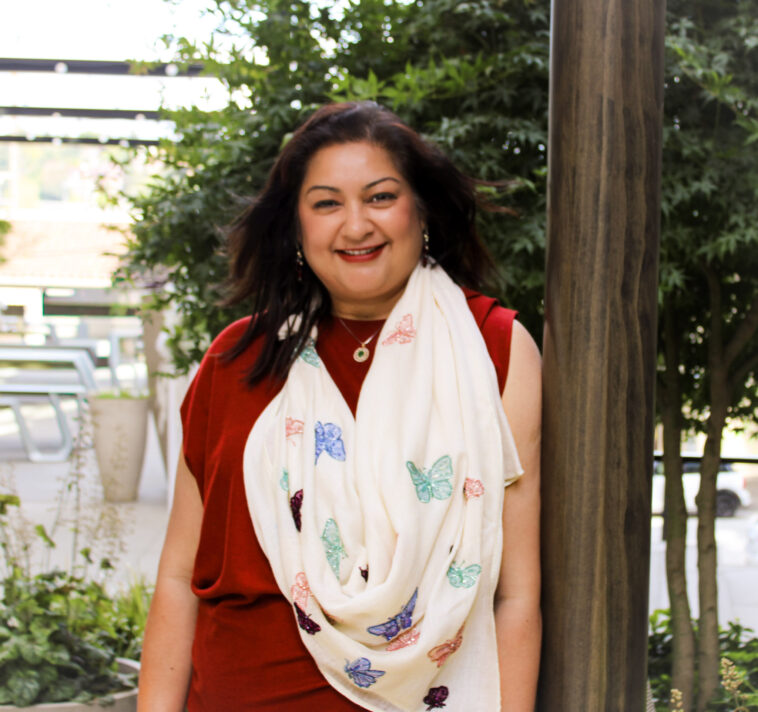
After more than 15 years in finance and technology, founder Surbhi Chaudhary is bringing generations of couture embroidery to a new audience through hand-embroidered cashmere shawls designed to celebrate craftsmanship, individuality, and the moments worth remembering. Drawing on the expertise of her husband’s family atelier in Mumbai, India, whose work has contributed to pieces seen at the Met Gala and Cannes Film Festival, Surbhi is bringing couture craftsmanship to women beyond the traditional fashion world.
A blue shawl embroidered with stars and delicate beadwork once helped Surbhi find her footing in a new workplace. At a Microsoft product launch party, the piece caught her colleagues’ attention, sparking conversations about its origins and the artistry behind it.
For Surbhi, that moment revealed that a thoughtfully crafted piece of clothing could connect people, inspire curiosity, and tell a story.
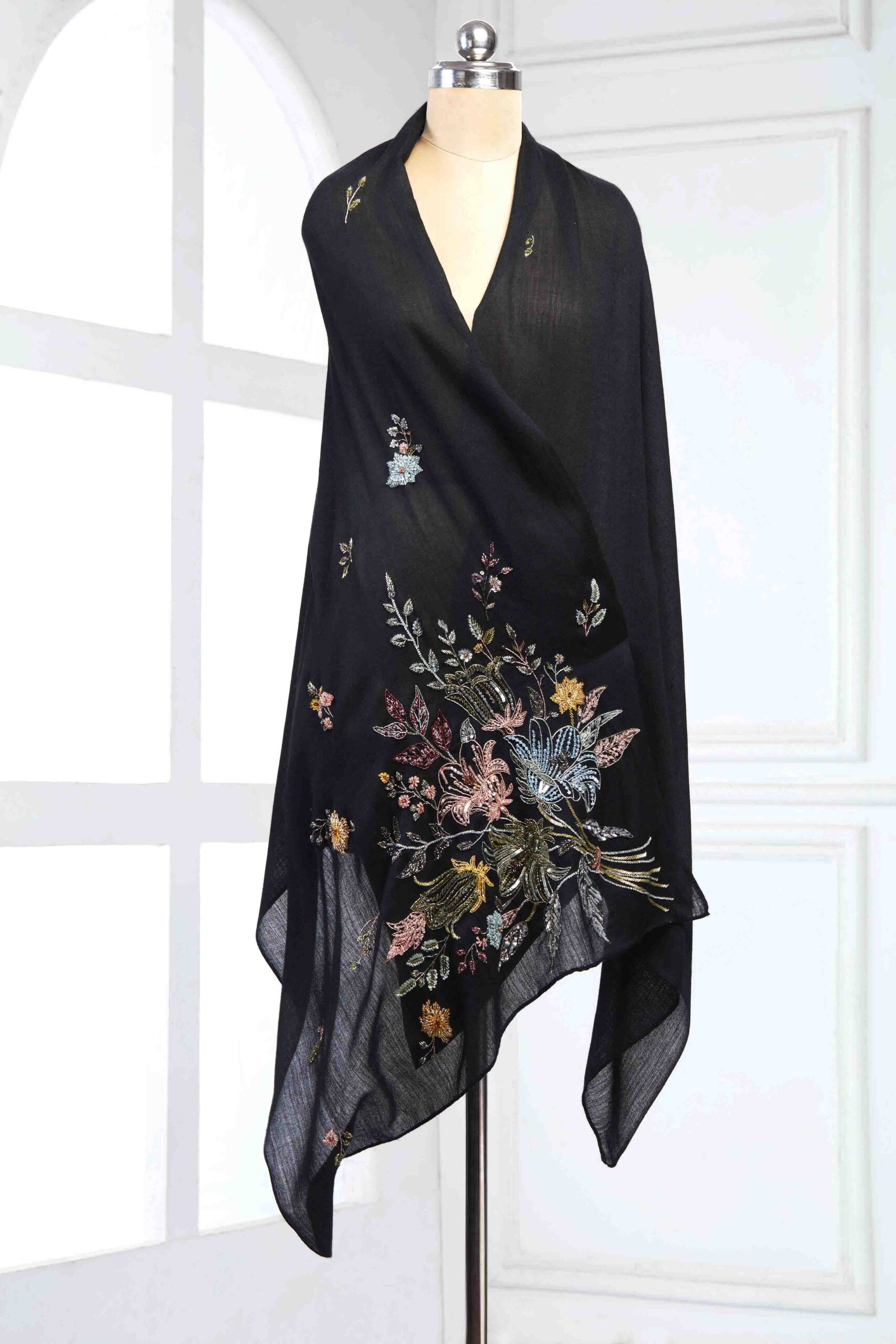
That idea eventually became Blooming Orchid, a luxury accessories brand creating hand-embroidered cashmere shawls and stoles that bring traditional craftsmanship into the modern woman’s wardrobe.
Drawing on the expertise of her husband’s family atelier in Mumbai, India, Surbhi is reimagining couture embroidery for weddings, galas, milestone celebrations, and other occasions. Her goal is to preserve the intricacy of the craft while making it part of women’s everyday lives and personal histories.
“I didn’t want to modernize the craft by simplifying it. I wanted to give that craft a new canvas,” Surbhi said.
From Corporate Life to Creativity
Surbhi’s path to fashion began far from the world of luxury accessories. Growing up in India as the eldest of three siblings, she spent her childhood exploring creative interests, including poetry, painting, dancing, and dramatics. Her father, a Chartered Accountant, influenced her decision to pursue a more analytical career, and she eventually became a Chartered Accountant herself.
She went on to spend more than 15 years in finance and technology, holding roles at Goldman Sachs, Microsoft, and Amazon. The experience gave her a strong foundation in business, strategy, and problem-solving, but over time, she began to feel disconnected from her corporate work.
“I valued that career and everything it taught me – until I started feeling disconnected from my corporate work and felt the need to build something more tactile, something I could actually hold in my hands,” said Surbhi.
Leaving a well-established career to launch a luxury fashion brand may seem like a dramatic change, but Surbhi sees the decision differently. Rather than abandoning her professional background, she found a way to combine it with the creative interests she had carried since childhood.

“So on paper, leaving the corporate world to build a luxury fashion brand may seem like a dramatic departure. But in some ways, Blooming Orchid feels like a return to that creative part of myself,” Surbhi said.
Blooming Orchid became the intersection of creativity and storytelling paired with the discipline and business thinking she developed throughout her corporate career.
The idea took shape gradually, through her growing appreciation for the embroidery created by her husband’s family and the reactions she received when wearing those pieces in the United States. The shawl at the Microsoft event was one example of how the artistry could resonate with people who had little familiarity with the traditions behind it.
“I was new to the group, and this piece of wearable art unexpectedly became a way to start conversations and connect with people,” she said.
That experience helped her recognize an opportunity to introduce more women to craftsmanship that had traditionally been associated with couture.
Preserving a Craft While Expanding Its Possibilities
The foundation of Blooming Orchid is a family atelier in Mumbai, where artisans have more than 25 years of experience creating couture hand embroidery. Their work has contributed to pieces seen on international fashion stages, including the Cannes Film Festival and the Met Gala.

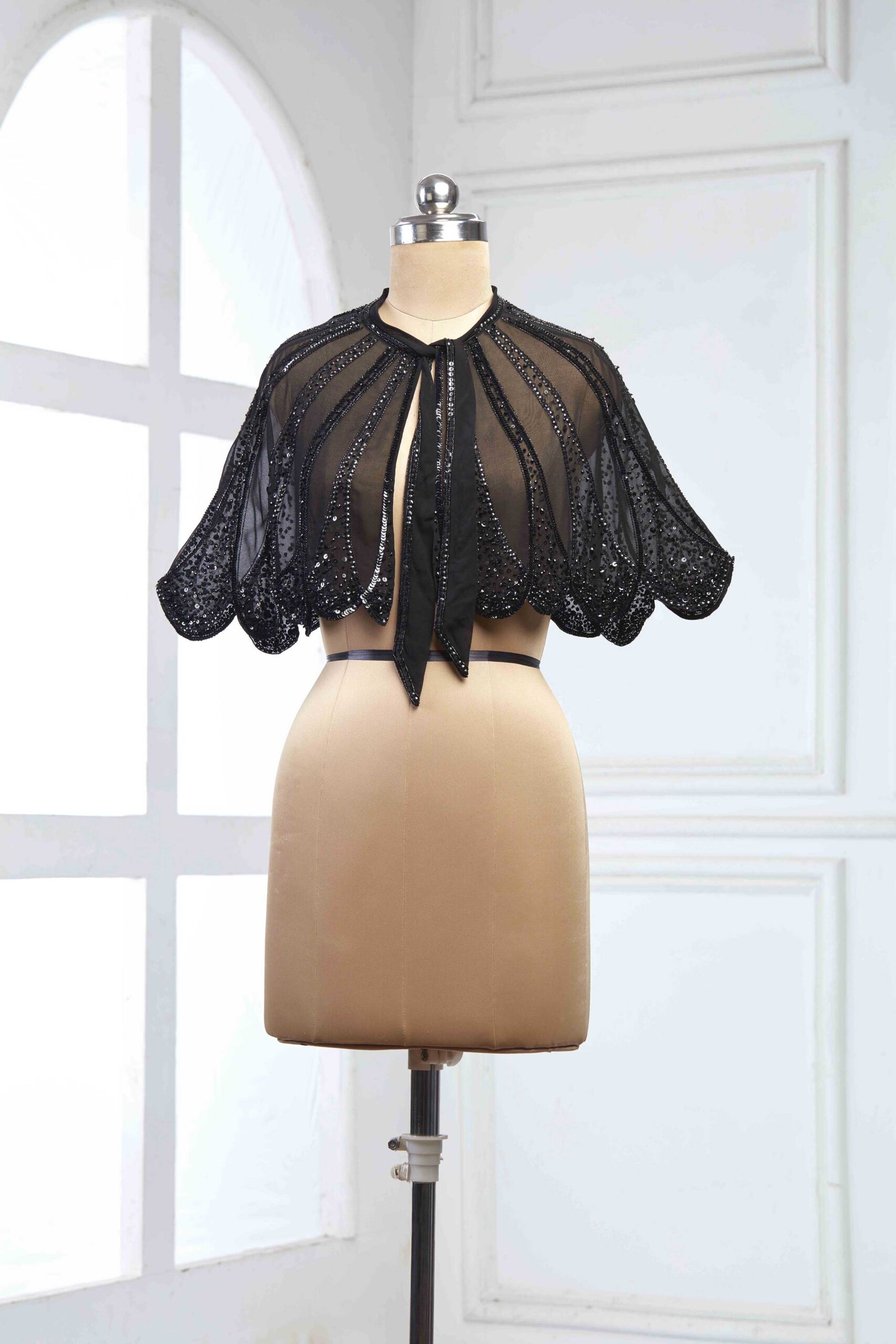
Although the atelier’s craftsmanship has reached some of fashion’s most recognizable settings, much of that work happens behind the scenes. Through Blooming Orchid, Surbhi hopes to give the artistry a more direct connection with the women who wear it.
“I kept thinking about the extraordinary level of skill behind that work and how rarely women outside the couture world have the opportunity to experience it,” she said.
Building a brand on an established tradition also comes with responsibility. Surbhi did not grow up working directly in the atelier; she became more closely connected to the craft through her husband’s family after marriage. Her own wedding trousseau included embroidered sarees and kurtas made using traditional techniques, and she later wore some of those pieces for special occasions after moving to the United States.
The admiration they received from people across different cultural backgrounds helped shape her perspective on how the craft could be presented to a wider audience.
“It showed me that you don’t necessarily need to understand the cultural origin of an art form to be moved by it. Art really can travel beyond borders,” Surbhi said.
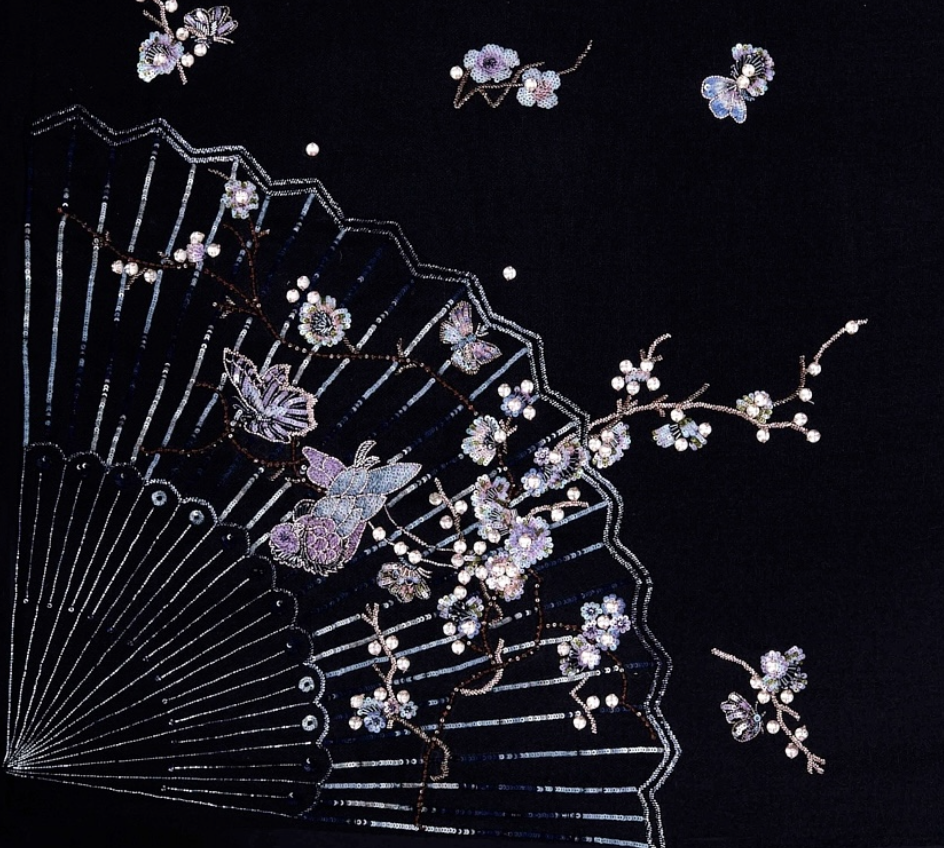
Traditional embroidery techniques are used to interpret motifs ranging from Japanese-inspired fans and hummingbirds to butterflies, roses, and celestial imagery. The intention is not to remove the craft from its roots, but to demonstrate how its techniques can express ideas that resonate across cultures.
“Blooming Orchid may be a young brand, but the hands and expertise behind it are certainly not new to couture,” she said. “That creates a responsibility for me, too. If we are putting this craftsmanship into the world in a new form, I want what we create to be worthy of the skill behind it.”
The Hours Behind a Design
At Blooming Orchid, inspiration might come from nature, travel, art, a color, or a personal experience. The design team then translates that idea into a visual composition before determining how the embroidery will bring it to life.
The process involves decisions about materials, texture, and dimension. Silk thread, sequins, pearls, crystals, and bugle beads can all play a role, depending on the design and the effect the team wants to achieve.
Once the design is finalized, skilled artisans execute the embroidery by hand. One piece, Beyond the Horizon, requires more than 135 hours of embroidery, while some of the brand’s most intricate Collector designs take more than 200 hours.

The time involved is reflected in the details that distinguish hand embroidery from machine-made work. Even when two artisans follow the same design, subtle variations in placement, tension, and interpretation mean the finished pieces will not be absolutely identical.
“To me, those variations aren’t imperfections — they’re part of what makes the piece individual,” Surbhi said.
She also points to the way embroidered elements interact with light and movement, details that can be difficult to appreciate fully in a photograph.
“Behind what might look like a beautifully effortless design can be 100 or even 200 hours of someone’s skilled work,” she said.
“I sometimes think of it as an intimate dialogue between the maker and the eventual wearer. Someone has spent days or weeks creating something by hand that another person may someday wear for one of the most memorable moments of her life.”
For Surabhi, the process is a reminder of the value of slowing down in a fashion landscape where products can be created and replaced quickly.
“I don’t see that as a rejection of modern fashion. I see it as another way of having a relationship with what we wear,” she said. “Sometimes one of the greatest luxuries is something that refused to be rushed.”
When Personal Memories Become Inspiration
Some of Blooming Orchid’s most distinctive designs are connected to experiences from Surbhi’s own life.
Butterflies, in particular, have a special meaning for her. When she was about 7 or 8 years old, she participated in a fancy-dress competition at school. Her mother and aunts created a fairy costume with butterfly wings, and Surbhi still remembers how she felt when she put it on.
“I still remember putting it on and feeling unbelievably confident — as though those wings meant I could fly off and conquer anything,” she said.
The butterfly motif appears in several designs, including Wings of Becoming, featuring colorful sequins; Lavender Wings, which incorporates feathers; and Becoming, which uses lace.
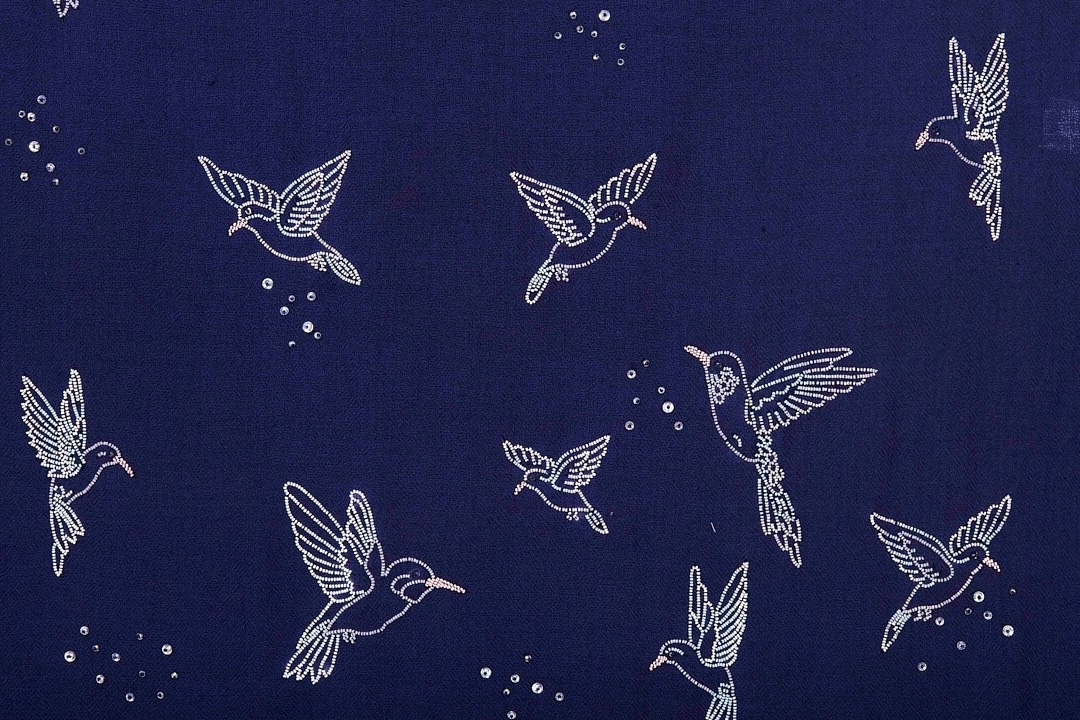
Another design, Beyond the Horizon, began with a book a dear friend gave her years ago: Richard Bach’s Jonathan Livingston Seagull. The book’s ideas about moving beyond perceived limitations left a lasting impression on Surbhi.
She envisioned the cashmere as an open sky, with embroidered birds taking flight across it. The resulting design became an expression of independence, possibility, and personal growth.
Even the names of the finished pieces are part of the creative process. Rather than identifying designs simply by product numbers, Surbhi chooses names such as Beyond the Horizon, Wings of Becoming, and Radiance Unveiled to reflect the emotions or ideas that inspired them.
The intention is to give each design a starting point for its own story, while leaving room for the wearer to develop a personal connection to it.
The Meaning of Modern Heirloom
The concept of a modern heirloom is central to Blooming Orchid, but Surbhi believes an heirloom does not need to look antique or traditional.
Contemporary motifs, intricate embroidery and modern silhouettes can all become part of something that lasts beyond a season. What transforms an object into an heirloom is not simply its age or durability, but the memories associated with it.
“I love the apparent contradiction in the words ‘modern heirloom,'” she said.
She imagines a woman wearing a Blooming Orchid shawl to her daughter’s wedding, a milestone birthday, an anniversary, or another occasion she will remember for years. Eventually, someone else in the family may wear the same piece, styling it differently while carrying its history forward.
“That’s what a modern heirloom means to me: old technique, modern imagination and, eventually, memory.”
The pieces are designed to work across different occasions, complementing formal gowns while also offering a distinctive layer for more understated outfits. Surbhi sees potential for the shawls at Central Florida weddings, galas and philanthropic events, as well as in theaters, restaurants and other air-conditioned venues where a lightweight wrap can be useful.
Whether choosing a piece for a milestone birthday, a wedding, a gala or another special celebration, women can make the designs their own through the way they style and wear them. The embroidery offers a distinctive finishing touch, while the meaning behind a particular motif can make a piece feel personal to the woman wearing it.
The broader idea is to create accessories that women want to return to, not pieces that feel relevant for only one event or season.
Sharing Stories of Resilience
For Surbhi, the stories connected to Blooming Orchid extend beyond personal celebrations. The brand’s collaboration with LifeWire, an organization supporting survivors of domestic violence, brought that philosophy into a collection designed around resilience and new beginnings.
The Resilience Edit includes pieces named The Next Move, Hope Returns, Ties That Lift Us, and Blooming Again. A portion of the proceeds supports LifeWire and its work with survivors.
The collaboration also recently raised $1,500 for LifeWire through a live auction at the organization’s gala, where the brand’s She Blooms Anyway piece was featured. Blooming Orchid will continue supporting LifeWire through December 31, with $100 from every Resilience Edit purchase going to the organization.

At the collection’s unveiling, Surbhi heard how the designs and their accompanying stories had affected attendees. LifeWire’s director shared that several women had been moved to tears as they read the stories. One survivor told Surbhi she would proudly wear her piece and explain its meaning to friends and family.
“At that point, the shawl was no longer simply carrying the story we had given it. She was giving it her own story,” Surbhi said.
The moment stayed with her because it captured what she hopes Blooming Orchid can offer: a piece that begins with the vision of a designer and the work of an artisan, then takes on additional meaning through the person who wears it.
“And perhaps that is what I ultimately want a Blooming Orchid piece to become,” she said. “The atelier begins the story, but the woman who wears it gets to continue it.”
Rare. Rooted. Radiant.
Surbhi’s vision for Blooming Orchid comes down to three words: rare, rooted, and radiant.
Rare reflects the individuality of hand craftsmanship. Rooted represents the traditional knowledge behind the work and the importance of preserving it as designs evolve. Radiant speaks to the woman herself and the confidence she brings to what she wears.
The philosophy also reflects Surbhi’s own transition from a career in finance and technology to entrepreneurship. She has taken the analytical skills developed over 15 years and applied them to a business that allows her to reconnect with her creative interests while helping traditional craftsmanship reach a new audience.
Ultimately, she hopes women will discover Blooming Orchid because a particular piece makes them pause and feel something, whether they are preparing for a formal occasion or simply looking for a way to express their individuality.
Her final thought brings the brand’s philosophy back to the person at the center of every design.
“Rare, because true hand craftsmanship and individuality cannot be mass-produced. Rooted, because we believe innovation doesn’t require forgetting where the craft came from. And radiant, because ultimately, no matter how beautiful the embroidery is, the woman wearing it should always be the one who shines,” she said.
For more information, visit @bloomingorchidusa and bloomingorchidusa.com.