
Drivers nationwide are experiencing the rising gasoline prices, as U.S. military operations near the Strait of Hormuz, where roughly 20% of the world’s oil supply passes, contribute to the increase.
According to the U.S. Energy Information Administration, Florida Regular Conventional Retail Gasoline Prices were $2.710 per gallon in January and rose to $4.246 per gallon in May.
Florida drivers are among the top three driving-cost burden states in the country, spending an average of $5,081 annually on fuel and car insurance combined, according to a recent study from MoneyGeek.

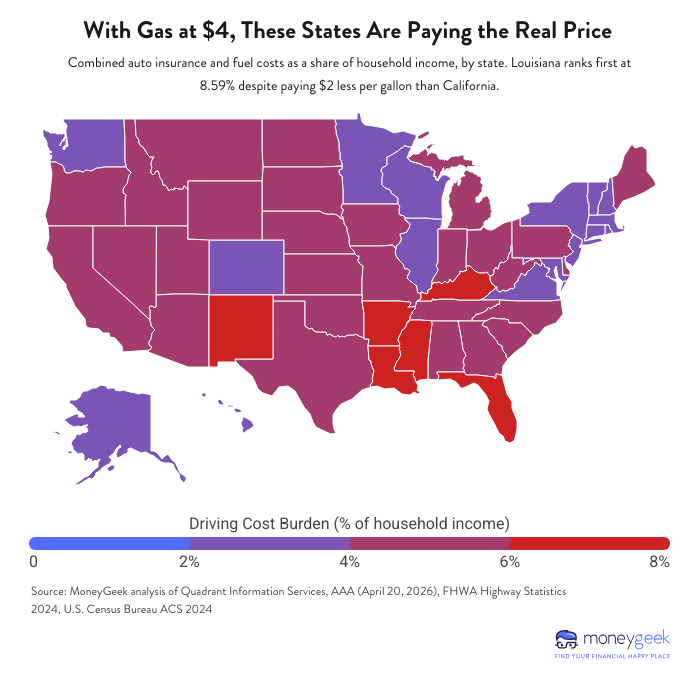
Researchers at MoneyGeek found that Louisiana ranks first in the country for driving cost burden at 8.58%, Mississippi ranks second at 7.29%, and Florida trails at 6.54%.
MoneyGeek analyzed all 50 U.S. states by tracking the combined annual cost of fuel and auto insurance as a share of median household income. Provided by the Bureau of Transportation Statistics, it was measured at the January pre-conflict baseline and the current April price from the Federal Highway Administration Highway Statistics 2024.
Comparing the January 2026 baseline with the April 2026 prices, the gas price spike since the beginning of the year has added an average of $653 per year to American drivers’ fuel bills, though the impact varies by state, the study shows.
MoneyGeek researchers found that Florida’s driving-cost burden increased by 0.92 percentage points after the gas price increase, from 5.62% in January to 6.54% in April.

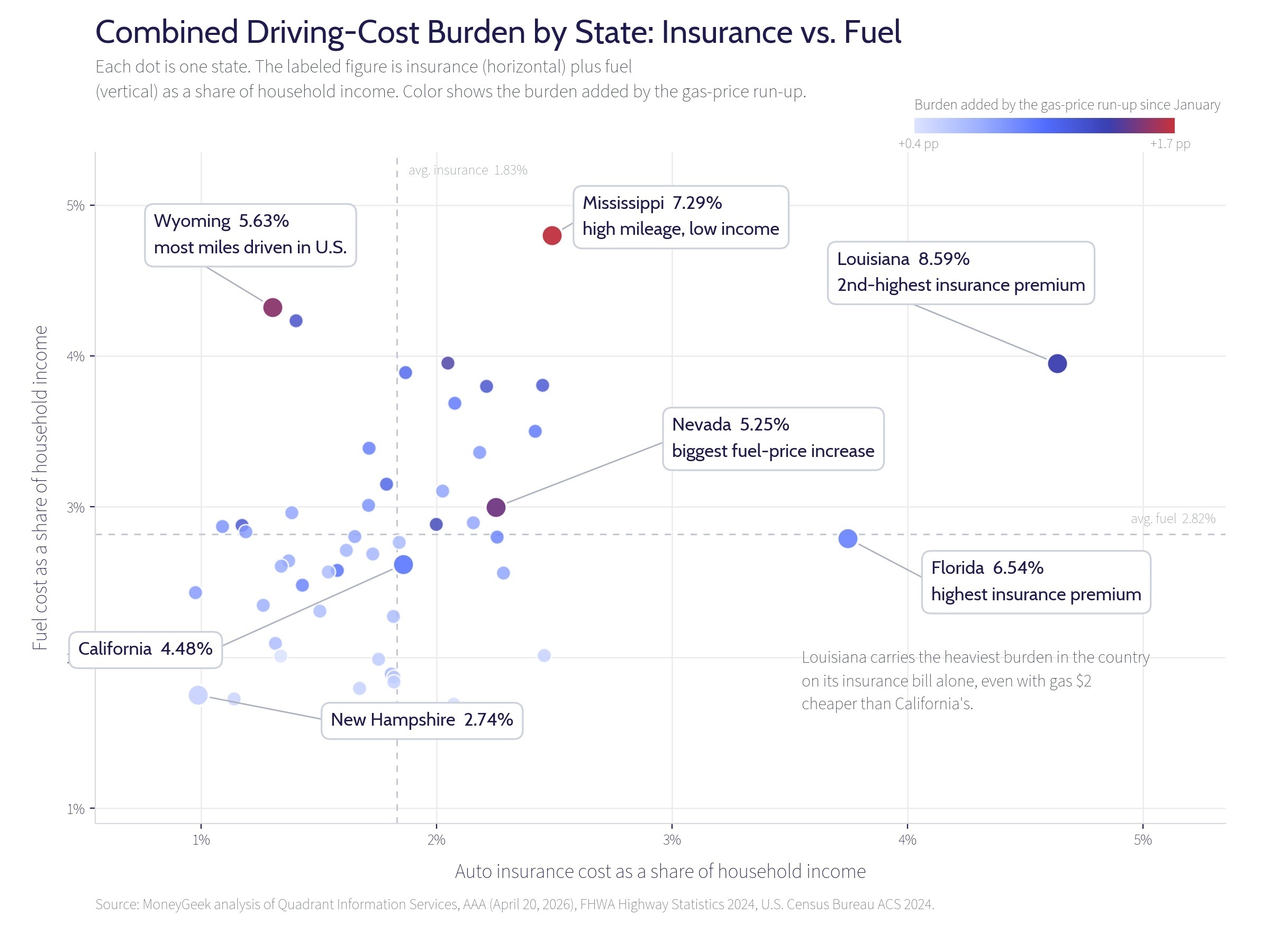
Although rising gas prices are a contributing factor, researchers at MoneyGeek also found that auto insurance costs have a larger impact. Of Florida’s $5,081 average, $2,169 derives from annual fuel costs, while $2,912 comes from annual auto insurance, making it the highest insurance premium of any state nationally, the study says.
Despite Louisiana ranking first overall for driving-cost burden, Florida’s insurance premium is $85 higher compared to Louisiana’s $2,827. The study indicated that both states’ annual insurance premiums are carried well above the national pattern and are products of market-level forces individual drivers cannot change, such as litigation environments, weather exposure, uninsured motorist rates, and state regulatory frameworks that predate any geopolitical event by years.
Researchers at MoneyGeek also found that Florida sits above states with heavier annual mileage, as Florida drivers average 13,807 miles per year, slightly above the national average used in the study of 13,596 miles per driver.
As negotiations between the U.S. and Iran have been postponed, as announced by Switzerland’s foreign ministry, Florida and nationwide drivers can only hope for future reduced costs.