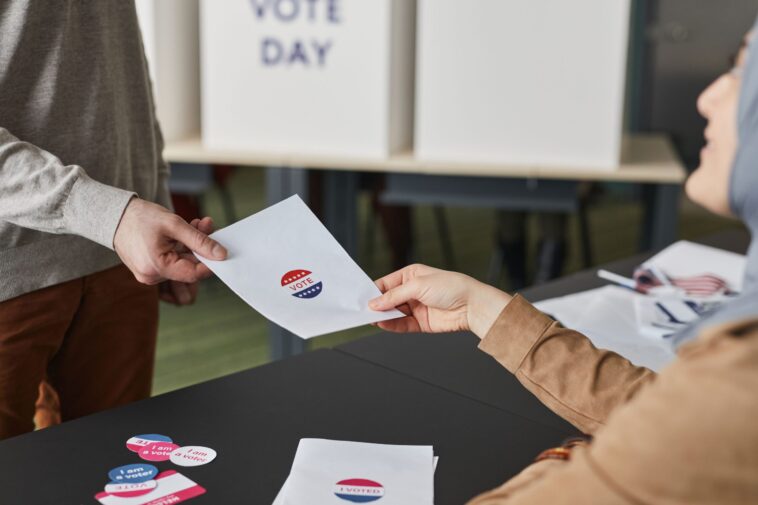
Florida voters will return to the polls Tuesday, Nov. 3, for the 2026 General Election. While the presidential race is not on the ballot this year, voters will decide who holds several major state and federal offices, as well as whether to approve three proposed amendments to the Florida Constitution.
What appears on an individual ballot will vary by county and congressional or legislative district, so voters should review their sample ballot before Election Day.
When Does Voting Start?
Election Day is Tuesday, Nov. 3. Polls will be open from 7 a.m. to 7 p.m. local time, and anyone in line at 7 p.m. will be allowed to vote.
Florida’s mandatory early voting period runs from Oct. 24 through Oct. 31, although counties may offer additional early voting days. Early voting locations and hours are set at the county level.
The deadline to register to vote for the general election is Oct. 5. Voters who want to vote by mail must request their ballot by Oct. 22.
Which Offices Are on the Ballot?
The 2026 election includes races at the federal, state, and local levels.
Statewide, Floridians will vote for:
- Governor and Lieutenant Governor
- U.S. Senator
- Attorney General
- Chief Financial Officer
- Commissioner of Agriculture
All U.S. House seats and all Florida House seats are also up for election, while even-numbered Florida Senate districts are on the ballot.
The Governor’s race is open because Gov. Ron DeSantis is term-limited. Following the August primary, the Florida Division of Elections lists Republican Byron Donalds and Democrat David Jolly among the candidates who advanced to the general election, along with several candidates running outside the two major-party nominations.
The U.S. Senate race will also be on the statewide ballot. The Florida Division of Elections lists Republican Ashley Moody and Democrat Angie Nixon among the nominees who advanced from the August primary, along with additional candidates.
Amendments on the Ballot
In addition to candidates, Florida voters will decide three proposed amendments to the state Constitution.
Amendment 1: Budget Stabilization Fund
The first amendment would increase the amount that can be held in Florida’s Budget Stabilization Fund from 10% to 25% of general revenue collections. It would also establish annual transfers into the fund, subject to specified conditions, and allow withdrawals for critical state needs.
Amendment 2: Agricultural Property Tax Exemption
The second amendment would exempt certain tangible personal property located on agricultural land from property taxation when that property is used in agricultural production or agritourism and meets the requirements outlined in the amendment.
If approved, the change would first apply to tax years beginning January 1, 2027.
Amendment 3: Homestead Property Tax Changes
The third amendment would make several changes to Florida’s property tax system.
Among other provisions, it would increase the homestead exemption for non-school property taxes to $150,000 in 2027 and $250,000 in 2028, with adjustments for inflation afterward. It would also reduce the annual assessment-growth cap for non-homestead property from 10% to 5%.
The amendment would take effect on January 1, 2027, if voters approve it.
Since constitutional amendments require at least 60% of votes cast on the measure to pass, each amendment is decided separately by voters.
Your Local Ballot May Look Different
Remember, no single statewide ballot contains every race.
Depending on where you live, your ballot may also include:
- U.S. House races
- Florida Senate races
- Florida House races
- County Commission seats
- School Board races
- Judicial races
- Special district elections
- Other county-specific offices or measures
The Florida Department of State publishes county-specific notices showing the offices and vacancies scheduled for the November election. Voters should check their county Supervisor of Elections for the most current information.
What to Know Before You Vote
Before heading to the polls, voters should take a few simple steps to make sure they are prepared.
- Check your registration before Oct. 5.
- Review your sample ballot.
- Know if you’re voting during early voting, on Election Day, or by mail.
- Bring identification.
- Give yourself time.
The Florida Department of State also recommends contacting your county Supervisor of Elections for county-specific voting locations, hours, and ballot information.
The 2026 General Election will determine leadership at the state and federal levels while also putting three proposed constitutional amendments directly before Florida voters.
Since the races and questions on the ballot can vary depending on where a voter lives, reviewing the ballot in advance is one of the simplest ways to understand exactly what will be decided when Election Day arrives.