


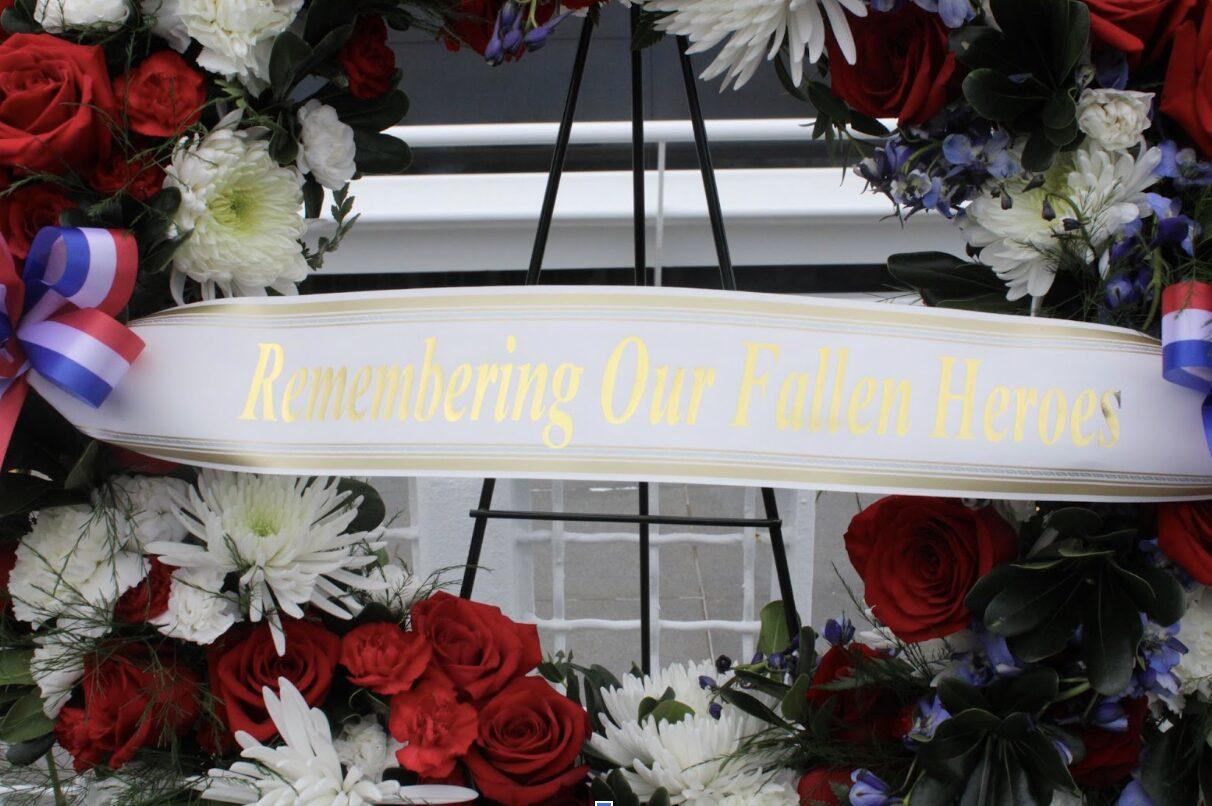
NASA remembered the astronauts who have passed away during space exploration tragedies, honoring crews of Apollo 1 and the space shuttles The Challenger and Columbia at 11 a.m. Thursday, Jan. 22. The Kennedy Space Center holds the annual remembrance every year on the fourth Thursday of January, as all three astronaut accidents occurred around the end of the month.
On NASA’s day of remembrance, this memorial is supposed to remind future astronauts not to shy away from space exploration and research, but to be aware of the risks any job can bring. This event focused on the memory of those lives lost in space with musical guests, a bell ringing commemoration, a moment of silence, and wreath-laying.
The Challenger incident took place on January 28, 1986, when it broke apart in only 73 seconds, killing all 7 crew members on impact. Apollo 1 was the first mission of the United States Apollo program, with three crew members passing away from a fire during a launch rehearsal on January 27, 1967. Finally, Columbia suffered a catastrophic accident as the shuttle re-entered the atmosphere on February 1, 2003, killing all seven crew members on board.
The Challenger, Apollo 1, and Columbia lost all the astronauts that were on board these shuttles. 40 years later, family, friends, and strangers come together to honor the memory of the fallen heroes who lost their lives doing what they loved.
The Science Behind it All
Alison Smith Balch, daughter of Mike Smith, who was the commander of The Challenger, reminisces on the positive memories that she shared with her father before his tragic passing.
“My dad truly was first and foremost my dad. Being an astronaut was his side job and he was dad first. I always have looked at it as I lost my father and the rest of the story was what he was doing when he died,” Balch said. “It becomes a leveling ground for anyone who has lost a parent in whatever way, it’s the same emotions, the same feeling, ours is just more public.”
Balch understands the importance of space exploration in helping mankind. Astronauts are risking their lives to do something that can change the way civilizations view our solar system.
“In my memory, somewhere are those stories of how people resonate with what I went through which is strange that I lost my father, but to everyone else they felt like they lost someone too,” Balch said.
Balch wants to spend time remembering those who have passed away from space exploration tragedies by simply talking about how important and selfless these individuals were.
Alan Hanstein, executive director of The Challenger Learning Center of Tallahassee, said that space exploration deserves to be explored in order to expand the knowledge the human race gathers from learning.
“It was important to come out to pay my respects and honor the legacy of all of these brave men and women who sacrificed everything for us to continue to explore space,” Hanstein said.
Without inspiration from these astronauts, Hanstein said he wouldn’t have been able to fulfill his dreams of working at the Challenger Learning Center.
Tim Potter, NASA Tech Corrector at The Kennedy Space Center, said that these three tragedies had a huge impact on NASA and the way astronauts afterwards were treated.
“After each of the accidents, it changed a lot of the procedures we operated by and it changed the philosophy on how we work on a day-to-day basis,” Potter said. “It opened us up to the fact that we need to listen to each and every person that is a part of an operation and if they see something that isn’t quite right, we want them to bring that issue forward before it’s too late.”
Potter believes that even though Earth isn’t our only planet, it is our only habitable home that we all need to keep safe and healthy.
“You realize that we are a very tiny world in a vast emptiness of space and it is high time that we all started acting as crew members instead of inhabitants of the Earth,” Potter said. “Crew members take care of one another no matter how difficult it gets.”
While nothing is one hundred percent certain, Potter wants aspiring crew members to know that dreams can become a reality even when it seems frightening or impossible.
NASA continues to remember the fallen heroes of the Challenger, Apollo 1, and Columbia through support and encouragement of future astronauts who are willing to make their dreams a reality by reaching for the stars.


Comments